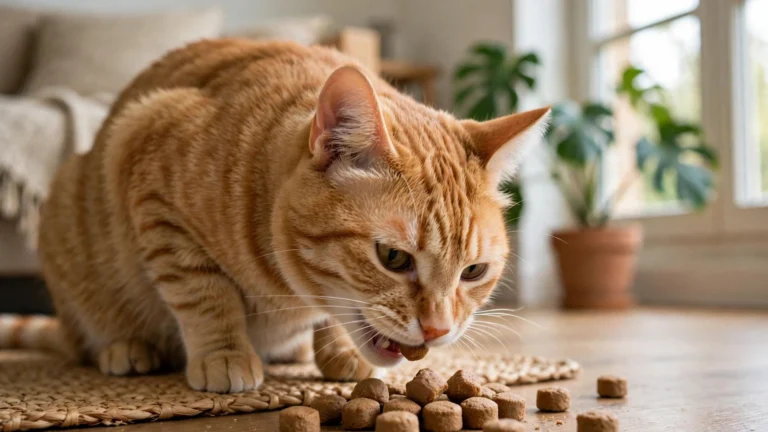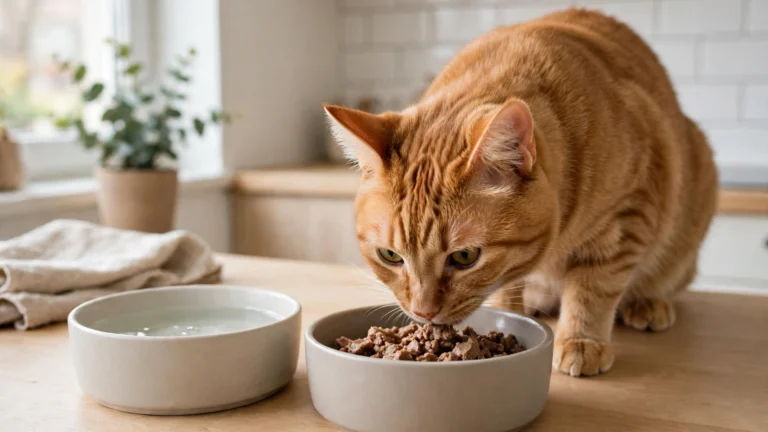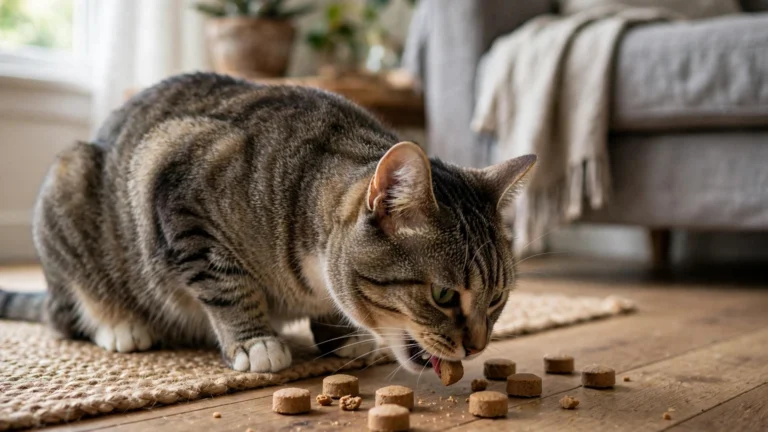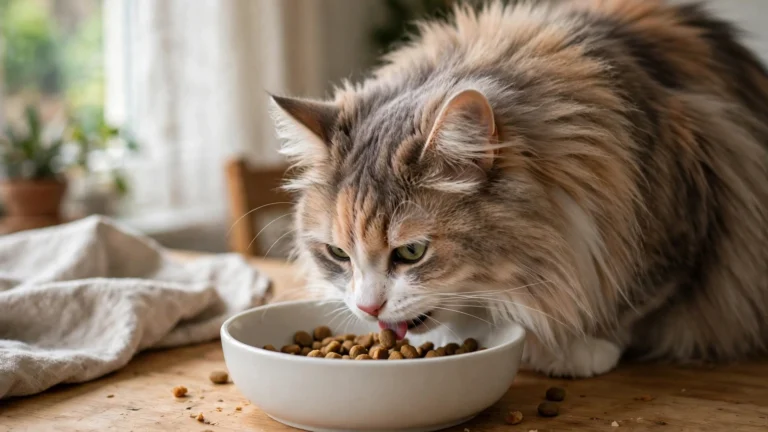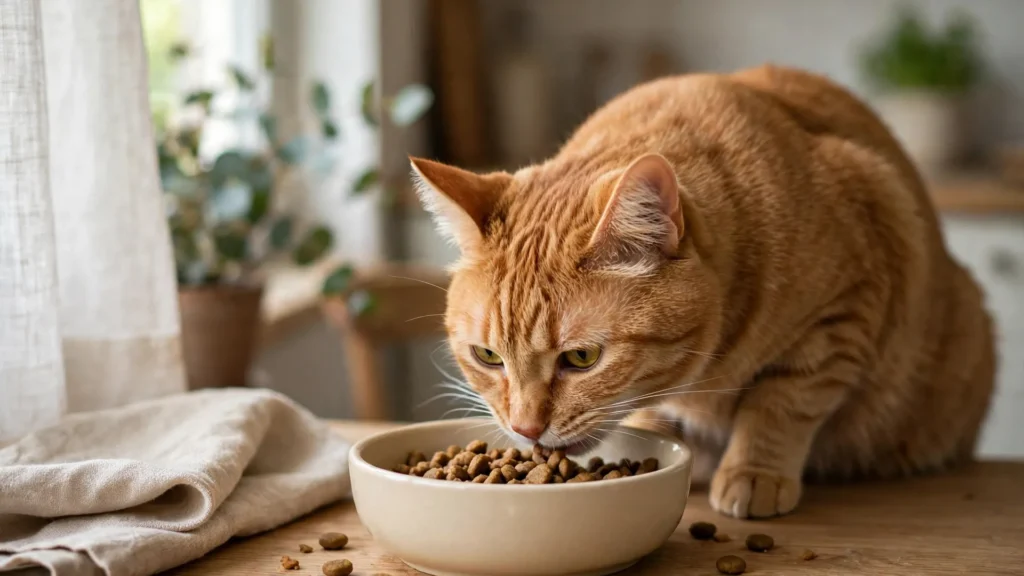
At dawn the kitchen was still quiet except for the soft pad of paws on tile and the rattle of a food scoop in a tin. My neighbour’s tabby arrived at his bowl the way he always did, unhurried, and settled in for breakfast while the kettle boiled. It was an ordinary morning, but the bowl looked fuller than the cat did happy, and the scoop had become a habit nobody had stopped to question.
That small moment is where weight conversations usually start, not with a dramatic event but with a routine that drifted. A cat that spends most of the day indoors, naps in sun patches, and grazes between naps can slowly carry more weight than suits him, and the owner often notices it first in how he moves, jumps, or plays. Food is only one part of that picture, and any change of diet is worth discussing with a veterinarian first, especially when weight has crept up over time.
The five foods below are grouped by the kind of household they tend to suit, rather than ranked as a single winner for every cat. Some suit a one-cat indoor home, some suit a home that needs measured portions, and one suits a cat that will only take wet food seriously. Read them as options to discuss with your vet, alongside portion size, play, and regular weigh-ins.
Iams Proactive Health Indoor Weight Control & Hairball Care Adult Dry Cat Food

In a one-cat flat where the cat lives almost entirely indoors, this Iams recipe speaks to two everyday worries at once. The chicken and turkey recipe gives an indoor adult cat protein to help keep muscle while calories stay controlled, and the fibre in the mix supports digestion in a cat that grooms often and passes hairballs. For a household with a single indoor cat and a predictable feeding routine, that combination covers a lot of ground without adding a second product.
Pros:
- Built around indoor cats and weight management in one recipe.
- Chicken and turkey recipe supplies protein for muscle maintenance.
- Fibre blend supports hairball reduction and digestive comfort.
- Nutrients for skin and coat health included in the formula.
- 7 lb. bag keeps a steady, consistent supply at home.
Cons:
- Not a fit for cats with chicken or turkey allergies.
- Some cats need time to accept the flavour after a brand change.
The indoor angle matters because an indoor cat burns less energy than a roaming cat, so the same scoop that once suited an active youngster can quietly become too much. This formula is built around that quieter life, with nutrients for skin and coat, including omega-6 fatty acids and antioxidants, alongside the weight-control balance. Owners who buy in the 7 lb. bag get a steady supply, which helps keep portions consistent from week to week instead of changing brands whenever the cupboard runs low.
It fits best in a home where hairballs are a regular topic and the cat eats dry food willingly. If your cat has a known allergy to chicken or turkey, or takes a long time to accept a new flavour, this is a reason to pause and talk to your vet rather than push through a switch. A slow transition and a measured scoop matter more here than any single ingredient claim.
To buy this product, click here.
Hill’s Science Diet Perfect Weight Adult Cat Food

For a home with one adult cat in the 1 to 6 year age range, this smaller Hill’s bag has a practical appeal. The 3 lb bag suits a household that wants to try a weight-management recipe without committing to a large sack, and the chicken recipe gives lean protein while fat and calories stay controlled. It suits an owner who measures food carefully and wants a recipe aimed squarely at adult cats in that age band.
Pros:
- Clinically proven antioxidants support a healthy immune system.
- Chicken as the primary ingredient supplies lean protein.
- Balanced nutrients help maintain a healthy weight.
- Easily digestible ingredients support digestive health.
- 3 lb bag is easy to store and good for trying the recipe.
Cons:
- Costs more than some generic cat food brands.
- Only one flavour, which may not suit every cat.
- Not made for kittens or senior cats outside the 1-6 year range.
The recipe leans on clinically proven antioxidants and vitamins that support the immune system, alongside ingredients chosen for easy digestion, so a cat absorbs nourishment without the meal feeling like a punishment. A less active cat, or one prone to gaining weight, gets balanced nutrition in a smaller daily amount, which is the whole point of a weight-control food: enough nourishment, not an empty bowl.
The limits are plain. It is a single flavour, it costs more than some generic foods, and it is not made for kittens or senior cats outside the 1 to 6 year range. In a multi-cat home where cats share bowls, the small bag also runs out faster, so portion control needs a plan for who eats what.
To buy this product, click here.
Hill’s Science Diet Perfect Weight
This second Hill’s Perfect Weight listing is the larger-bag cousin of the previous pick, and it suits a different household rhythm. Where the 3 lb bag suits a trial, the 7 lb bag suits a home that has already settled on this recipe and wants to feed it steadily without frequent shopping trips. The chicken-led recipe, antioxidants, and natural fibres stay the same in spirit, aimed at adult cats aged 1 to 6 years who need to hold or reach a healthy weight.
Pros:
- Clinically proven antioxidants support a healthy immune system.
- High-quality chicken as the primary ingredient for protein.
- Helps maintain lean muscle mass while supporting weight loss.
- Natural fibres support digestive health.
- 7 lb bag suits regular, steady feeding.
Cons:
- Costs more than generic cat food brands.
- Dry food format only, with no wet food option.
- Not suited to cats outside the 1-6 year range or with specific dietary restrictions.
For a busy household, the larger bag removes one weekly errand and keeps the feeding routine stable, which matters more than it sounds: cats do better on consistent food and consistent portions than on a rotating cast of bags. The fibre supports healthy digestion during a diet change, a common worry when calories drop, and the protein helps maintain lean muscle while weight comes down gradually.
The same cautions apply as with the smaller bag. It is dry food only, with no wet option in this listing, it costs more than generic food, and it is not suited to cats outside the 1 to 6 year range or with specific dietary restrictions. A household with a kitten or a senior cat sharing the bowl needs a separate plan for that cat.
To buy this product, click here.
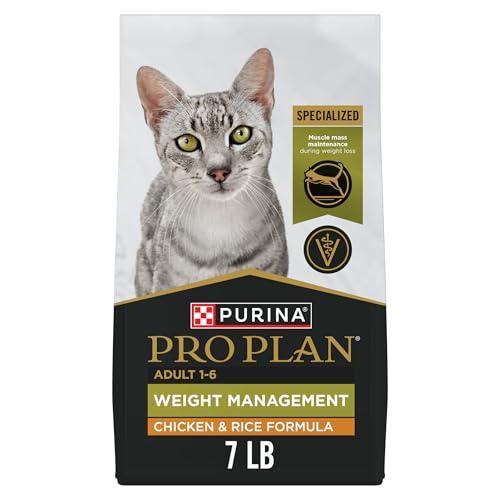
Purina Pro Plan Weight Management Dry Cat Food

In a home where the cat is prone to weight gain but still begs loudly at mealtimes, this Purina Pro Plan recipe tries to keep satisfaction in the picture. Real chicken supplies protein for lean muscle, while rice gives easily digestible carbohydrate for energy without excess calories, so the cat can feel fed rather than short-changed. That matters in a household where a hungry cat will lobby every person who walks past the kitchen.
Pros:
- Real chicken and rice for protein and digestibility.
- Controlled calories and balanced nutrients support weight management.
- Vitamins and minerals promote overall health.
- Made by Nestle Purina Pet, a well-known pet nutrition brand.
- Helps maintain lean muscle mass while reducing body fat.
Cons:
- Not suited to cats with chicken or rice allergies.
- Some cats may prefer wet food over dry kibble.
- Price may be higher than generic cat foods.
The formula adds vitamins and minerals for immune health, coat condition, and digestive function, with calories controlled so meals stay enjoyable without tipping into overfeeding. For an owner who wants a widely available, balanced dry food and is willing to measure portions, it is a straightforward daily option rather than a specialist project.
It is not the pick for a cat with chicken or rice allergies, or for a cat that strongly prefers wet food over kibble, and it costs more than generic food. In those homes, the wet Royal Canin pick below, or a vet discussion about texture, is a better next step than insisting on dry food the cat will not eat.
To buy this product, click here.
Royal Canin Feline Care Nutrition Weight Care Adult Thin Slices In Gravy Cat Food
Some cats simply will not engage with dry food, and in that household this Royal Canin wet food earns its place. Thin slices in gravy give a texture many cats find appealing, which can help a picky eater finish a measured meal instead of walking away from kibble, and the wet format adds moisture to the daily diet. For a cat that prefers wet food, a food the cat actually eats in the right portion beats a theoretically better food left in the bowl.
Pros:
- Balanced formula supports weight management.
- Thin slices in savoury gravy appeal to picky eaters.
- Made with no artificial colors.
- 3 oz cans make portion control simple.
- Produced by Royal Canin, a trusted pet nutrition brand.
Cons:
- May cost more than generic cat food brands.
- Limited flavour variety may not suit all cats.
- Pack size may not suit multi-cat households.
The 3 oz cans make portion control visible: one can, one meal, no guessing with a scoop. The recipe is made with no artificial colors and comes from Royal Canin, a long-established pet nutrition brand, and it is built for adult cats that need to lose weight or hold a healthy weight. That combination of measured cans and an appealing texture suits a home where mealtimes need structure.
The trade-offs are cost compared with generic foods, limited flavour variety, and pack size: a 12-pack of 3 oz cans may not stretch far in a multi-cat household. Owners feeding several cats should count cans per week honestly before choosing this as the main food, and keep the vet in the loop about total daily calories across all foods and treats.
To buy this product, click here.
Which Pick Fits Your Home?
Weight-control food works best when it fits the household it lands in, not just the cat in isolation. Use these household sketches as a starting point, then check portions and total calories with your vet.
- One indoor cat, regular hairballs: the Iams indoor recipe covers weight control and hairball care in a single dry food, with a 7 lb. bag for steady feeding.
- Trying a weight recipe for the first time: the 3 lb Hill’s bag lets a single adult cat household test the recipe and the flavour before committing to a larger sack.
- Settled on Hill’s and feeding daily: the 7 lb Hill’s bag suits a household that wants the same recipe, steadily, without frequent reordering.
- A cat that begs between meals: the Purina Pro Plan chicken and rice recipe pairs protein with digestible carbohydrate, so measured meals can still feel satisfying.
- A cat that refuses kibble: the Royal Canin thin slices in gravy give measured 3 oz wet portions with a texture picky cats often accept.
- More than one cat sharing the kitchen: count portions per cat separately, since a food that suits one adult cat may not suit a kitten, a senior, or a cat with allergies in the same home.
Frequently Asked Questions
What Cat Food Helps With Weight Loss Effectively?
IAMS Proactive Health and Hill’s Science Diet Perfect Weight support weight loss. They provide balanced calories and essential nutrients. These foods help cats lose weight safely while maintaining muscle and energy levels.
How Does Hill’s Science Diet Aid Cat Weight Management?
Hill’s Science Diet Perfect Weight offers controlled calories and high-quality protein. It promotes fat loss and preserves lean muscle. The formula supports healthy metabolism and helps cats maintain an ideal weight.
Is Purina Pro Plan Good For Weight Control Cats?
Yes, Purina Pro Plan Weight Management formula is designed for weight control. It contains balanced nutrients and helps reduce fat while maintaining lean muscle mass. The chicken and rice recipe supports digestion and overall health.
Are Grain-free Weight Management Cat Foods Beneficial?
Grain-free foods offer alternatives for cats with sensitivities. They provide high protein and probiotics for gut health. These recipes support healthy weight and digestion without grains or gluten.
Can Indoor Cats Benefit From Weight Control Formulas?
Indoor-specific formulas like IAMS Proactive Health are tailored for less active cats. They contain fewer calories and added fiber to promote fullness. This helps indoor cats lose weight and reduce hairballs effectively.
Conclusion
A useful way to close the loop is to think in weeks, not days. Pick one recipe that fits your household, agree portions with your vet, weigh the cat regularly, and give the routine time to settle before judging it. Gradual weight loss is kinder than a sudden cut, and play, fresh water, and measured treats all count toward the daily total.
If weight does not shift, or if your cat stops eating, vomits, or seems unwell, that is a vet conversation, not a cue to cut portions further on your own. Food supports a weight plan; it does not replace medical advice, and a cat that loses weight for no clear reason deserves a check-up.
Keep the scoop, the scale, and the feeding times consistent, and let the cat’s energy, movement, and mood tell you how the plan is going alongside the numbers. A calmer mealtime routine is a good outcome in its own right, even before the weight follows.