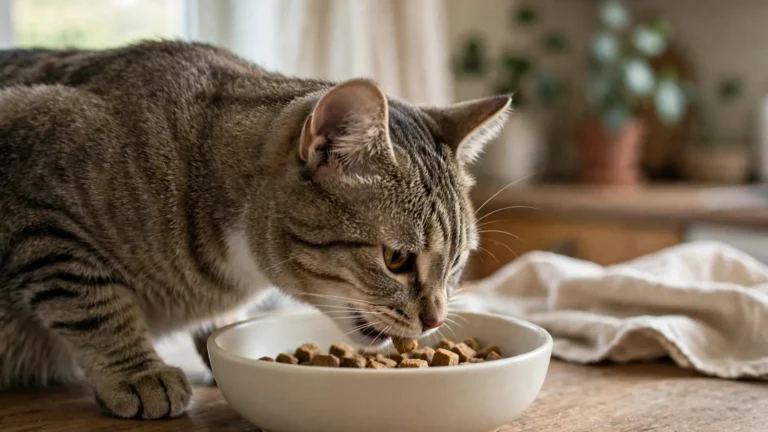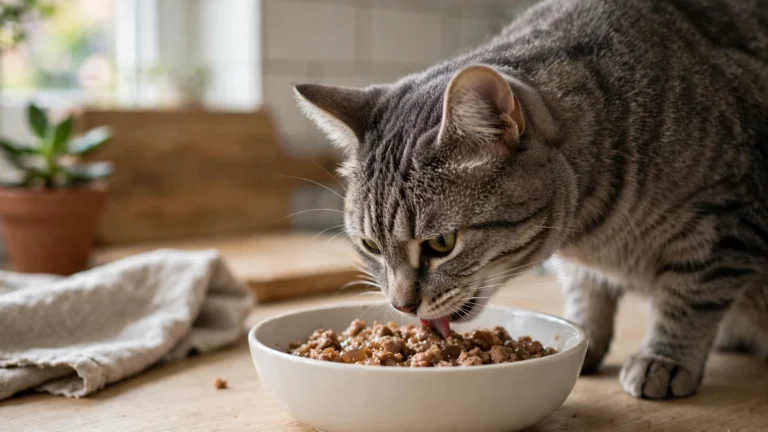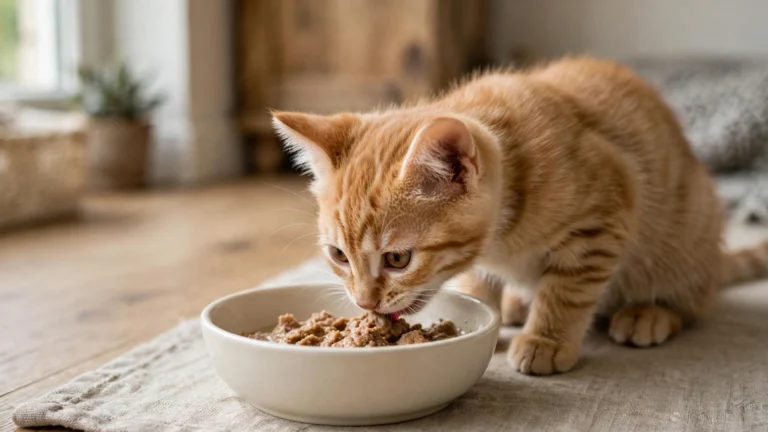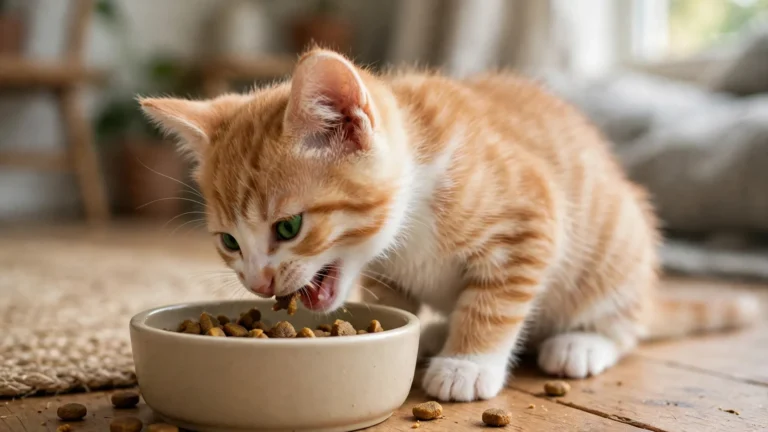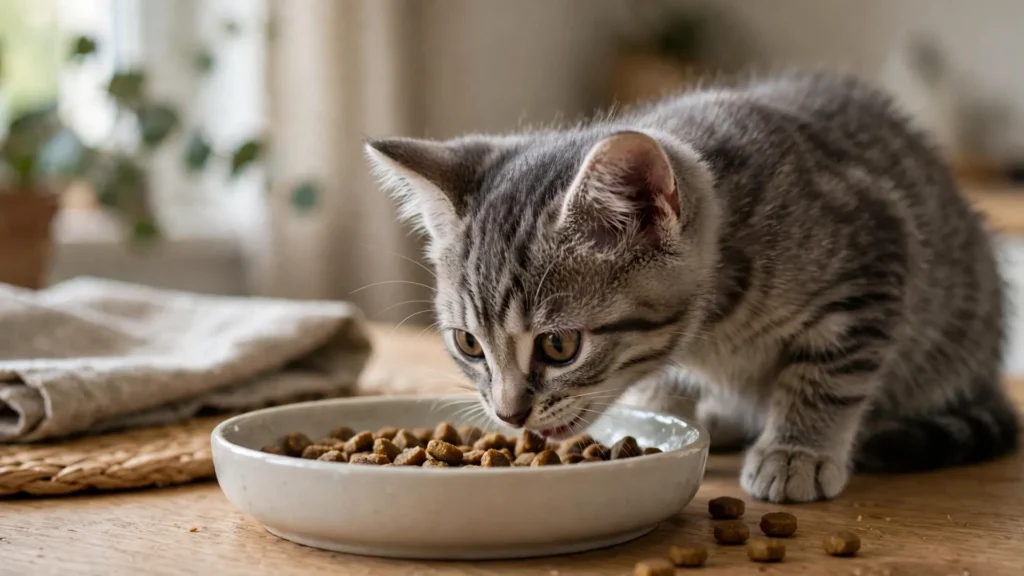
The kitten arrived home in a cardboard carrier, all ears and opinions, and spent her first evening batting a single piece of kibble across the kitchen floor like it was prey. She ate three pieces, chased a fourth under the fridge, and then fell asleep in the food bowl itself, which seemed, to her new owner, like a reasonable review of dinner.
That first week is when hard food stops being an abstract shopping decision and becomes a daily routine. A kitten needs small pieces she can pick up with a small mouth, enough energy in small meals to fuel fast growth, and a recipe made for kittens rather than a scaled-down adult food. Owners often feel lost among bags that all promise growth, so a simple checklist helps more than a louder label.
The five dry foods below are all kitten recipes, described in the order they appear live. One leads the list with a fuller profile, three are short single-paragraph sketches, and the last carries general feeding guidance alongside its own description. Keep that shape in mind as you read, and use the feeding notes at the end of the final section as general guidance, not as a substitute for your vet’s advice.
Iams Proactive Health Kitten Dry Cat Food

For a household bringing home a first kitten, this Iams recipe gives the fullest starting point in the list. The balanced formula includes high-quality proteins, vitamins, and minerals tailored to growing kittens, supporting strong muscles, healthy bones, and a robust immune system through antioxidants, which matter most in the early months when growth is fastest. Kibble size and texture are designed to be easy for kittens to chew, so feeding time feels manageable rather than a struggle with pieces too large for a small mouth.
Pros:
- Formulated with essential nutrients to support healthy growth and development in kittens.
- Contains antioxidants and vitamins to boost the immune system.
- Made by IAMS, a reputable and well-known pet food brand.
- Comes in a convenient 7-pound size to last through multiple feedings.
- Designed to promote healthy digestion and nutrient absorption.
Cons:
- May not suit kittens with specific allergies or dietary restrictions.
- Limited flavour options compared to some other brands.
- Packaging dimensions might require adequate storage space due to its size.
The practical side suits a busy home too. The 7-pound package works for households with multiple kittens or for owners who prefer buying in bulk to avoid frequent purchases, and the IAMS brand behind it is a familiar name for first-time owners who want a trusted manufacturer rather than an unfamiliar import. Healthy digestion and nutrient absorption are part of the same pitch, which matters when a kitten’s stomach is still learning new foods.
The limits are worth naming. It may not suit kittens with specific allergies or dietary restrictions, flavour options are limited compared with some brands, and the larger package needs adequate storage space. None of those points disqualifies it, but a kitten with a known allergy needs a different starting point, discussed with a vet.
To buy this product, click here.
Royal Canin Feline Health Nutrition Kitten Dry Cat Food

For a household that wants a kitten formula focused on the first year of life, this Royal Canin recipe keeps the pitch narrow and steady. Protein supports muscle development during that rapid first year, DHA supports brain and vision development, and antioxidants help support a developing immune system. The small, kitten-sized kibble is designed for small mouths and developing teeth, making it easier to pick up and chew, which is the daily reality of feeding a young kitten rather than a marketing detail.
To buy this product, click here.
Blue Buffalo Baby Blue Natural Kitten Dry Cat Food

For a home that prefers a natural recipe with real chicken first, this Blue Buffalo Baby Blue food gives a straightforward kitten option. Real chicken supplies protein for healthy muscle growth, DHA helps support brain and eye development, and small kibble suits small mouths and developing teeth. Formulated for kittens, it provides a natural dry-food option with essential vitamins and minerals for everyday feeding, without asking the owner to learn a complicated feeding system.
To buy this product, click here.
Purina ONE High Protein Natural Dry Kitten Food

For a household watching the budget, or feeding indoor kittens at home every day, this Purina ONE recipe offers a practical, widely available dry food. High protein supports strong muscles and healthy growth, DHA supports brain and vision development, and small kibble pieces are made for small mouths and developing teeth. Formulated to be complete and balanced for kittens when fed as directed, it is a sensible everyday choice for owners who want kitten nutrition without a premium price tag or a specialist order.
To buy this product, click here.
Blue Buffalo Tastefuls Kitten Food

For a home that wants a chicken-first kibble in a daily-feeding bag, this Blue Buffalo Tastefuls food fits neatly into the lineup. It leads with real chicken, includes DHA to support healthy brain and eye development during the fast-growing kitten months, and is made in the USA with natural ingredients in a convenient 7-lb. bag for daily feeding. For owners who want a straightforward, chicken-first kibble, it is an uncomplicated pick.
Pros:
- Contains DHA for brain and eye development.
- Real chicken as the leading ingredient.
- Made with natural ingredients in the USA.
- Balanced nutrients for healthy growth.
- Convenient 7-lb. bag for daily feeding.
Cons:
- May cost more than generic kitten food options.
- Some kittens may need a gradual transition to the new recipe.
- Limited to the chicken recipe, so picky kittens have fewer flavour choices.
To buy this product, click here.
What to Look for in a Kitten Kibble
When choosing a kitten kibble, look for animal protein from a named source, such as chicken, listed first in the ingredients, with roughly 30% or more protein to support growth. DHA is also worth looking for, because it supports brain and vision development in young kittens. Small kibble pieces are easier for small mouths and developing teeth to pick up and chew, and the label should state that the food is formulated to meet AAFCO nutrient profiles for growth or for all life stages.
Kittens grow quickly, so choose a calorie-dense kitten food that provides enough energy in small meals, and follow the feeding guide on the bag for your kitten’s age and weight. Always keep fresh water available alongside dry food, because kibble contains little moisture. When you switch brands, transition gradually over several days, mixing increasing amounts of the new food with decreasing amounts of the old food to help avoid digestive upset.
Which Kibble Suits Your Kitten’s First Months
Kitten kibble is less about finding a perfect bag and more about matching a few basics to your home: small pieces, kitten-specific nutrition, and a feeding routine you can keep up every day.
- First kitten, first bag: the Iams 7-pound recipe gives a full growth profile with antioxidants and easy-to-chew kibble, suited to a household learning the routine.
- A kitten in the rapid first year: the Royal Canin recipe focuses on protein, DHA, and small kibble for small mouths and developing teeth.
- A home that prefers natural recipes: the Blue Buffalo Baby Blue food leads with real chicken and DHA in a natural dry-food format.
- A budget-conscious everyday routine: the Purina ONE high-protein kibble is widely available, complete and balanced for kittens when fed as directed.
- A chicken-first daily bag: the Blue Buffalo Tastefuls 7-lb. bag suits steady feeding, with the general feeding guidance in its final paragraphs as a checklist.
- Any kitten, any bag: follow the feeding guide for age and weight, keep fresh water beside dry food, and transition gradually over several days when switching brands.
Frequently Asked Questions
What Makes Iams Proactive Health Kitten Food Special?
Iams Proactive Health kitten food contains essential nutrients for growth. It supports immune health and brain development, ideal for active kittens.
How Much Dry Food Should I Feed My Kitten Daily?
Feed kittens about 1/4 to 1/3 cup of dry food daily. Adjust portions based on age, weight, and activity level for best results.
Is Iams Kitten Food Suitable For All Breeds?
Yes, Iams Proactive Health kitten food is formulated for all breeds. It meets nutritional needs for healthy growth and development.
Can This Dry Food Help With Kitten Digestion?
Yes, it contains prebiotics and fiber to support healthy digestion. This helps maintain good gut health and nutrient absorption.
How Does Iams Kitten Food Support Immune Health?
The food includes antioxidants and vitamins to strengthen the immune system. This helps kittens fight infections and stay healthy.
Is dry food alone enough for a kitten?
A complete dry food that is formulated for AAFCO growth can cover a kitten’s nutritional needs on its own. Mixing in some wet food can still help, because it adds moisture for hydration and gives your kitten more variety in texture and flavor. Whether you feed dry food alone or mix it, always provide fresh water.
How much kibble should a kitten eat each day?
Start with the feeding guide on the bag for your kitten’s age and weight, and use that amount as your starting point. Split the daily amount into several small meals through the day, because kittens have small stomachs and burn energy quickly. Check your kitten’s body condition regularly and adjust the amount as needed, asking your veterinarian if you are unsure.
Conclusion
A kitten’s first months pass quickly, and the food routine you build now tends to stick. Small kibble, a named animal protein, DHA for brain and eye development, and a label that states growth or all-life-stages nutrition give you a solid checklist, whatever brand you land on.
Feed by the guide on the bag for your kitten’s age and weight, keep fresh water beside the bowl, and change foods gradually over several days if you switch. Those three habits do more for a kitten than any single bag, and they keep mealtimes calm while growth does its noisy work.
If your kitten eats poorly, loses weight, or has ongoing digestive trouble, talk to your vet rather than cycling through bags. A healthy start is a partnership between good food, clean water, and a vet who knows your kitten.